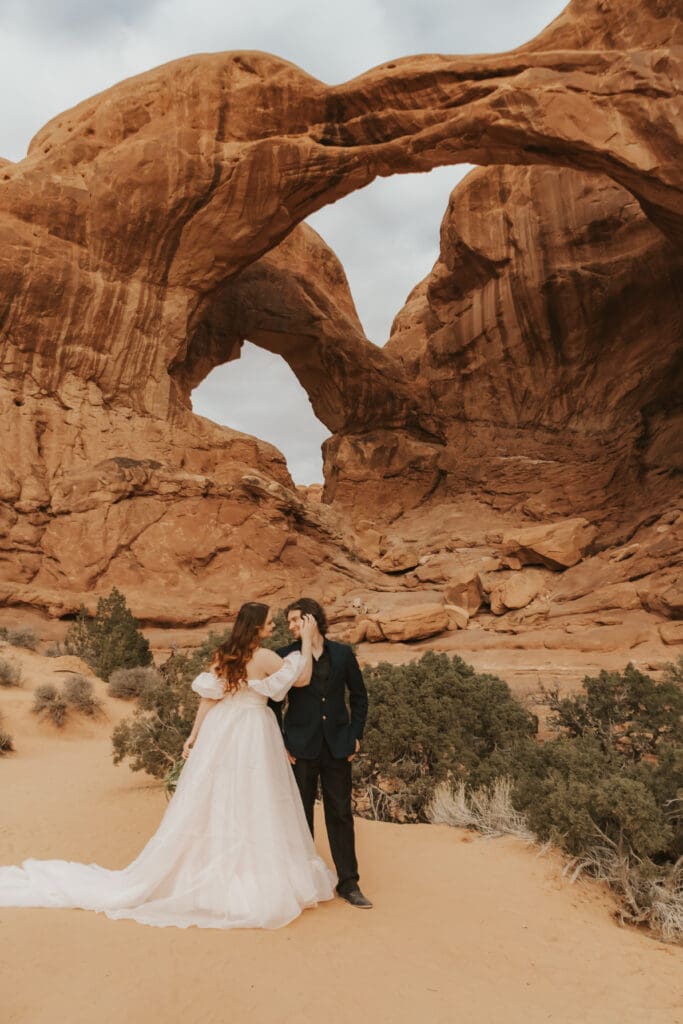
Short answer: yes. A Utah national park elopement is completely legal. But there’s a longer version that’s worth reading before you commit to a location, because there are rules that catch people off guard, and the rules are different for every park. Here’s what you actually need to know.
You need a permit
Every Utah national park requires a Special Use Permit for any organized ceremony happening on park property. That includes elopements, whether you’ve got two guests or twenty. You apply directly through the National Park Service, each park handles its own applications, and there are rules about where the ceremony can happen, how many people can attend, and what you’re allowed to bring in.
The permit process is not as intimidating as it sounds. Fees tend to be modest (usually under $100 at most Utah parks) and the applications are pretty straightforward once you know what you’re filling out. The part that catches people is the timeline. Spring and fall dates fill up fast, and some parks are booked out further than you’d expect. If you’ve got a specific date in mind, the earlier you apply the better.
Zion National Park
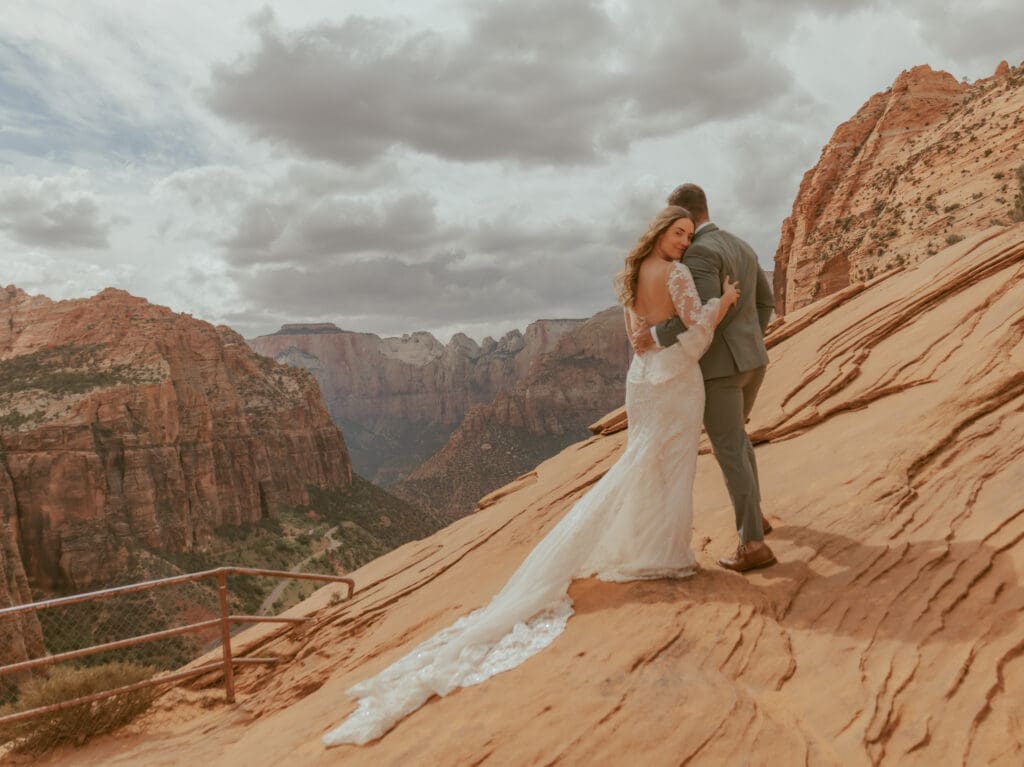
Zion requires a Special Use Permit and limits ceremonies to designated sites within the park. Group size is capped at 25 people or fewer, which genuinely works out fine for most elopements. That part isn’t the challenge.
The challenge is the crowds. Zion is one of the most visited national parks in the entire country, and even with a permit that reserves your site, you’re still sharing the park with a lot of other people. Your ceremony spot is yours. The trail to get there is not. Spring and fall are significantly better than summer or any holiday weekend. If you want Zion to feel like it’s actually yours for a day, timing matters more there than anywhere else on this list.
My opinion: some couples are set on a Zion elopement and that’s completely valid. Those canyon walls are genuinely unlike anything else in Utah. But if privacy is also on your list, it’s worth talking through the areas just outside the park before you finalize anything.
Arches National Park
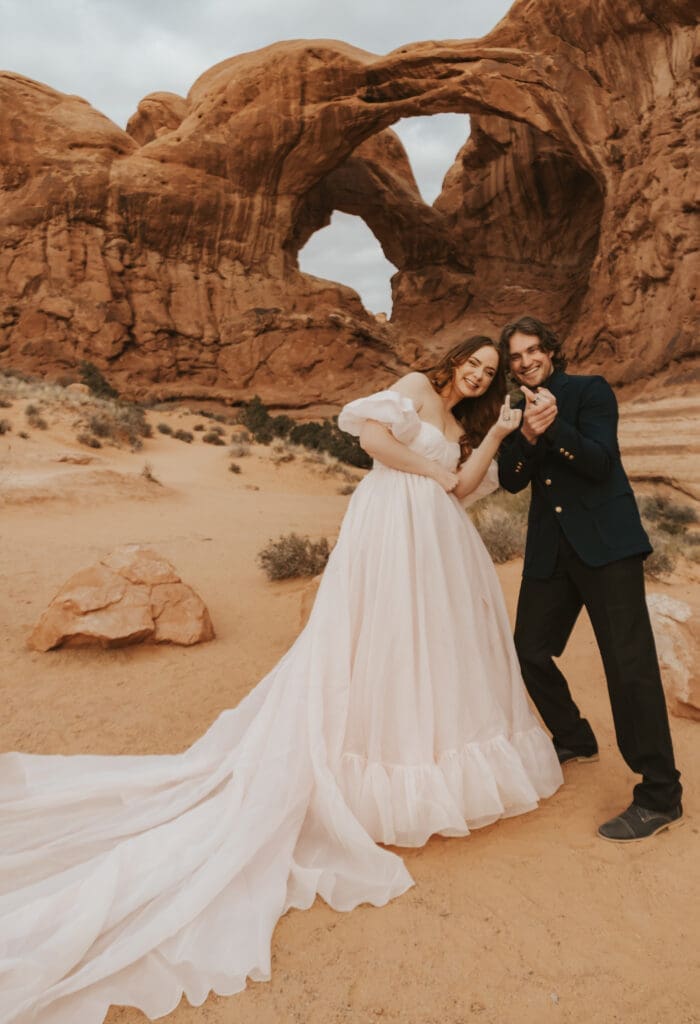
Arches also requires a Special Use Permit and has designated ceremony areas. This is where I see the most surprises. Arches is one of the most visited national parks in the country, full stop, and the permit gets you a site, not a private park. You can absolutely have a ceremony there. But “at Arches” doesn’t automatically mean quiet or unhurried, and those two things matter for an elopement more than most couples realize until they’re standing in a crowded parking lot at sunrise.
If what you want is Moab scenery, the BLM land surrounding the parks draws from the same red rock landscape and generally doesn’t require a ceremony permit at all. That’s worth knowing before you decide.
Bryce Canyon National Park
Bryce requires a Special Use Permit and has group size limits. What makes it different from the other parks on this list is the elevation. Parts of Bryce sit around 8,000 feet, which means cooler temperatures, different light, and mornings that can catch people off guard in terms of how cold it actually gets. Snow is possible well into spring. That’s not a downside, just a different kind of environment, and in the right season it’s genuinely stunning.
The hoodoo formations are one of a kind. If you want a national park elopement that looks completely different from classic red rock desert, Bryce is the one that delivers that. It also tends to get less traffic than Zion or Arches, which helps.
Capitol Reef National Park
Capitol Reef requires a Special Use Permit and tends to have more flexibility in terms of ceremony site options than some of the bigger parks. It also sees far fewer visitors than Zion or Arches, which is honestly its biggest advantage for an elopement. Fewer crowds means the day can actually breathe.
I think Capitol Reef is genuinely underrated and I’ll say that plainly. The cliffs and canyon colors are dramatic in a way that surprises people who haven’t been, and the atmosphere is quieter in a way you can feel from the moment you arrive. If you want national park scenery without the tour bus situation, Capitol Reef belongs on your list.
Canyonlands National Park
Canyonlands requires a Special Use Permit and is one of the more remote parks in Utah. That remoteness works in your favor for an elopement. It draws fewer visitors than most of the other parks, partly because it takes more effort to get to, and that translates to a ceremony that actually feels like yours.
The views from the Island in the Sky district are some of the most dramatic anywhere in the state. You’re looking out over hundreds of miles of canyon country. It’s a lot. For couples who want national park scale without the national park crowd, Canyonlands is worth a serious look.
What you can’t do (this part matters)
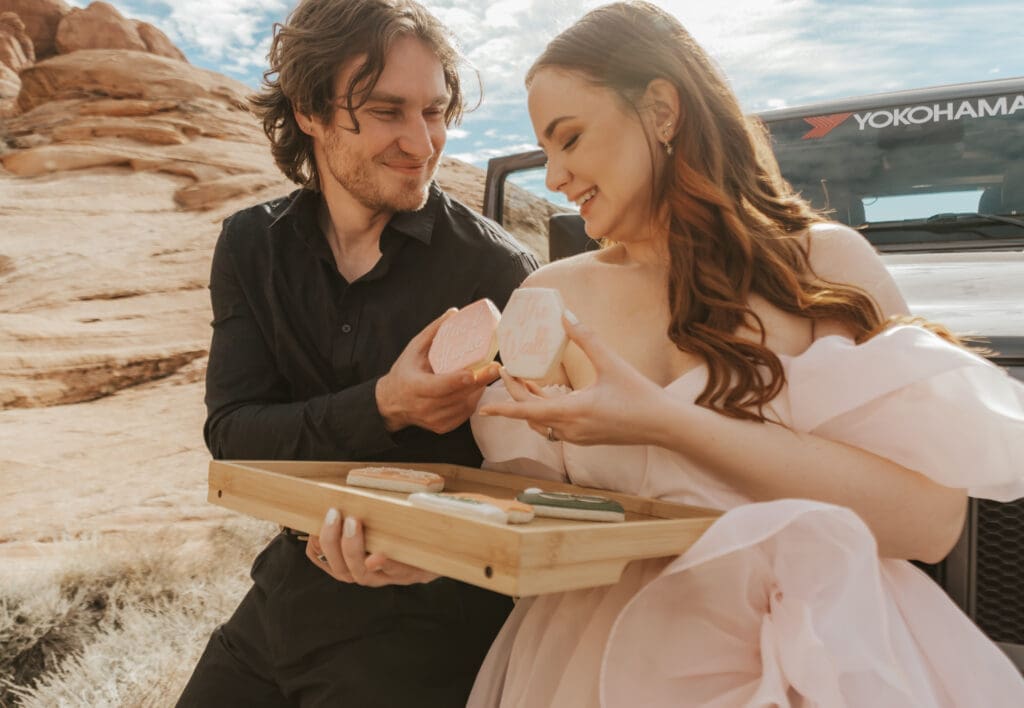
Inside any Utah national park, there are real restrictions on what’s allowed during a ceremony and they’re worth knowing before you plan around something the park won’t approve. Most parks prohibit amplified music, large decorative structures like arches or arbors, confetti, scattered flower petals, and anything that could disturb vegetation or wildlife. Some parks restrict where you can set up even temporarily.
None of this makes a Utah national park elopement impossible. But it does affect what the ceremony looks like in practice, and couples who find this out after they’ve already pictured their day a certain way sometimes feel like they have to start over. Better to know going in.
What BLM land actually offers
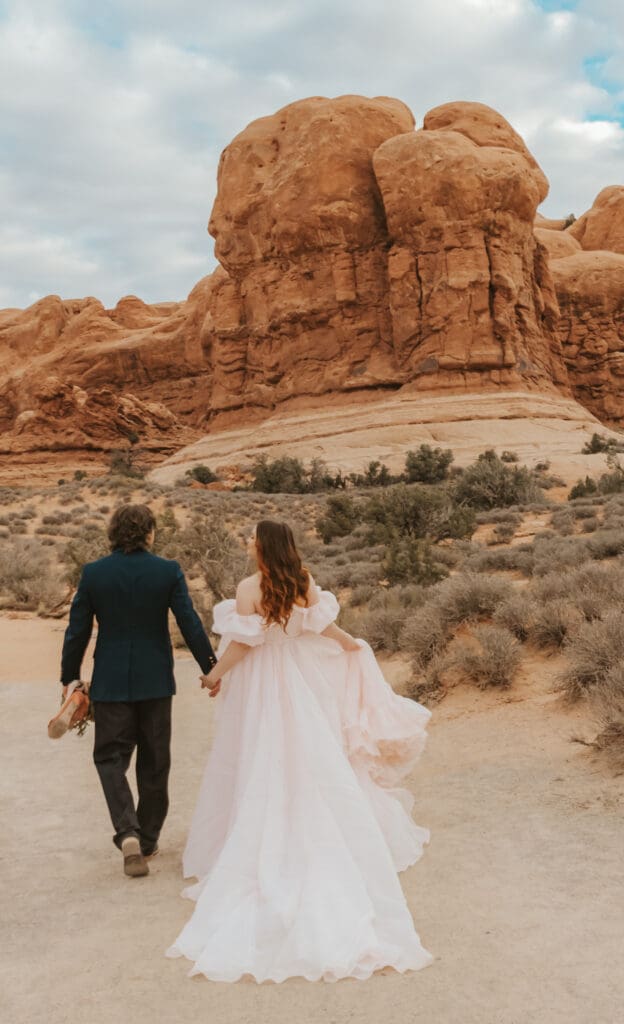
Bureau of Land Management land, which covers a huge portion of southern Utah, generally doesn’t require a permit for an elopement and doesn’t carry the same list of restrictions that national parks do. No designated ceremony sites, no group size caps, no rules about what you can bring in. The scenery pulls from the same landscapes you’re picturing. The difference is in how the day feels: quieter, more remote, and genuinely yours.
This isn’t me talking you out of a Utah national park elopement. Some couples are set on a specific park and that’s a completely legitimate call. But if you’re on the fence and flexibility and privacy are priorities, BLM land is worth a real conversation before you decide.
How this actually works when you book with me

If you’re working with me, the permit process is something we sort out together. I’ve worked through it across all five of these parks and I know what each one requires, how far in advance to apply, and what you can realistically expect from each location. You don’t have to figure it out by Googling around.
More importantly, choosing where to elope in Utah isn’t just a permit question. It’s a question about what kind of day you actually want. The best location for you depends on what time of year you’re eloping, how many guests you’re bringing, whether privacy matters more than landmark scenery, and a dozen other things that are worth talking through before you commit.
If you’re working through all of this and want someone to help you sort it out, I’d love to get on a call. We’ll figure out which location fits what you’re after and what the day could actually look like. Reach out and let’s start planning.





View comments
+ Leave a comment